Floods pose a significant risk to communities within West of Hudson Watershed (WOH), with many communities still feeling the effects of Tropical Storm Irene. That storm left communities devastated without access to emergency services and caused millions of dollars in property damage. Historically, many Catskill communities settled close to waterways. As a result, flooding is a hazard for our communities.
While flooding poses a risk to all structures near waterways, those situated within the floodway are much more likely to suffer from structural damage than those located within the larger 100- or 500-year floodplains. Engineering to protect against loss of life or property in floodways is more complex than in floodplains due to the depth and speed of floodwaters.
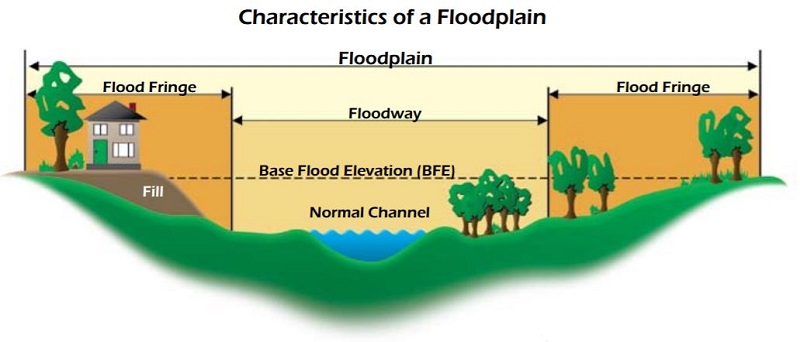
Floodplains are areas of land adjacent to bodies of water that periodically experience inundation during flood events. Within a larger floodplain, the floodway is the portion of the channel and adjoining land actively conveying water and where the flood hazard is generally the greatest due to water depths and high water velocities. Structures within floodways face even greater hazards than those in a floodplain because floodwaters there are deeper, fast-moving, and capable of causing severe erosion, debris impacts, and structural failure. Development in floodways can obstruct the flow of water, increasing floodwater elevations and exacerbating flooding.
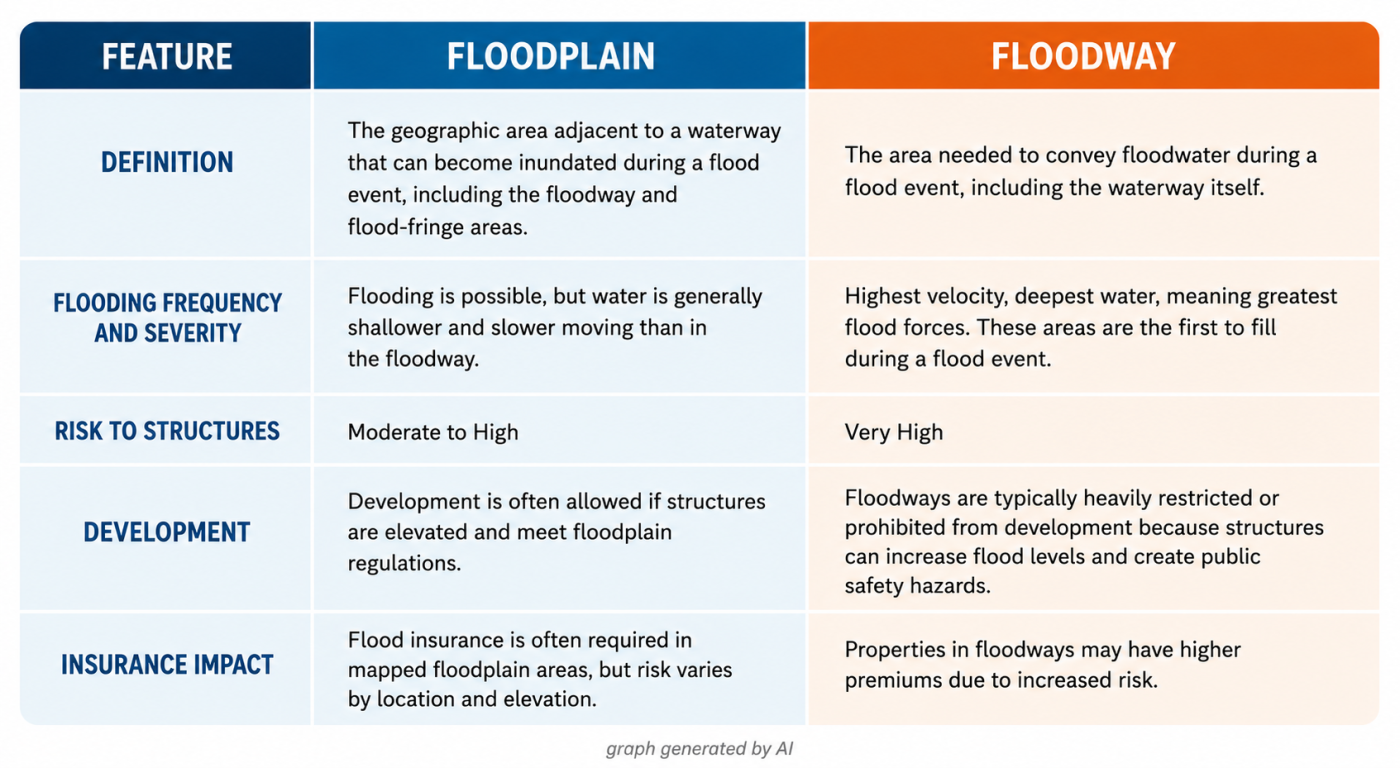
Mitigation measures to protect structures in floodplains and floodways are very different. In a floodplain, mitigation measures are often large-scale and focused on supporting groundwater recharge, improving water quality, and protecting individual structures. Protections for individual structures in floodplains are also more feasible, with flood barriers, tank anchoring and floodgates offering valuable protection that would be ineffective in floodways because of the vast amount of water flowing through the area.
However, Floodways are a different matter because during a flood event, floodways rapidly move water downstream, often at great depth. This distinction in implementation of flood mitigation measures is important, as some measures which are appropriate in a floodplain are futile to protect structures that are in a floodway.
The Flood Hazard Mitigation Implementation Program (FHMIP) is a grant program run by the Catskill Watershed Corporation to fund projects aimed at preventing and mitigating flood damage in the West of Hudson watershed, specifically to remedy situations where an imminent and substantial danger to people or property exists; or to improve community-scale flood resilience while providing a water quality benefit. Property owners may apply directly to the CWC for assistance including debris removal, tank anchoring, and relocation assistance. Municipalities that have completed a local flood analysis may apply to the CWC for projects such as alterations to public infrastructure, property protection measures, stream related construction work, and relocation assistance for critical community facilities and certain businesses. The website www.catskillstreams.org contains all completed local flood analyses within the watershed.
Flooding in the New York City Watershed West of the Hudson River is not new, with many remembering the 1996 flood or the flooding and damage from Tropical Storm Irene. These storms were destructive and caused massive damage across the Catskills to our communities. Many structural protection measures for buildings which are extremely valuable in a floodplain cannot be effective in a floodway because greater water depths and speed of floodwaters. The CWC administers programs like the FHMIP to assist homeowners, businesses, and municipalities to assure community vitality as well as preventing and mitigating flood damage. For every homeowner, it is important to consult the LFA applicable to your property to determine what flood mitigation measures may be appropriate.
To learn more about the flood program and other resources available to residents and business in our watershed communities, visit our programs page.
_________________________________________________________________________
Guest Contributor: Nicholas Mammel, 2L, Elisabeth Haub School of Law at Pace University